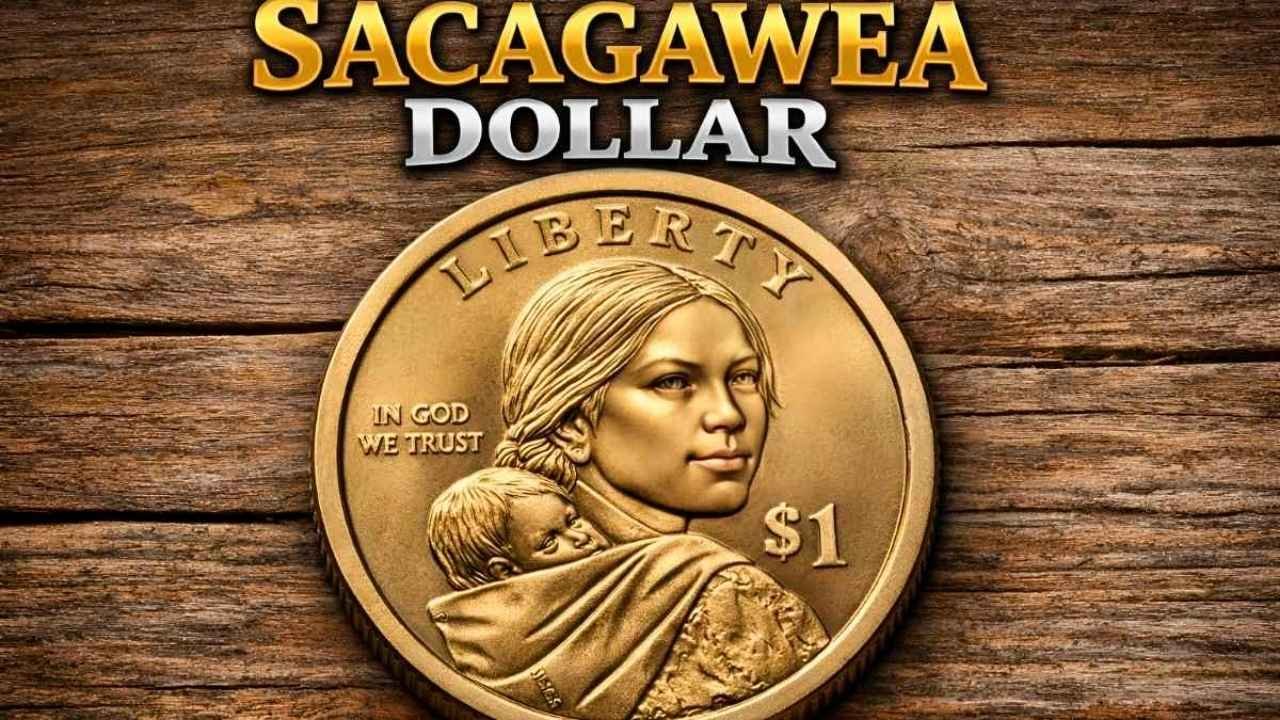
The Sacagawea Dollar, first released in 2000, was designed to honor Sacagawea, the Shoshone woman who played a vital role in guiding the Lewis and Clark expedition. With its golden color and distinctive design, the coin quickly became a modern collectible. While most Sacagawea Dollars are common and circulate at face value, certain rare varieties and error coins have emerged as treasures in the numismatic world. As we enter 2026, collectors are increasingly interested in identifying these rare pieces and understanding their true value.
The Story Behind the Sacagawea Dollar
The U.S. Mint introduced the Sacagawea Dollar to replace the Susan B. Anthony Dollar, which had been unpopular due to its similarity in size and color to the quarter. The new coin featured a golden hue, a smooth edge, and a bold design. Glenna Goodacre created the obverse, depicting Sacagawea carrying her infant son, Jean Baptiste. The reverse showcased an eagle in flight, symbolizing freedom and the spirit of America.
Although the coin was intended for widespread circulation, it never gained strong popularity in everyday commerce. Instead, it found a niche among collectors and became a canvas for special editions and experimental minting.
Why Some Sacagawea Dollars Are Rare
Most Sacagawea Dollars are worth only one dollar, but certain varieties stand out due to limited production, unique designs, or minting errors. These rare coins are highly sought after because they combine modern history with scarcity. Collectors prize them not only for their monetary value but also for their role in telling the story of American coinage in the 21st century.
7 Modern Treasures in the Sacagawea Dollar Series
1. The 2000 Cheerios Dollar
One of the most famous rarities is the Cheerios Dollar. In 2000, the U.S. Mint partnered with General Mills to distribute Sacagawea Dollars in Cheerios cereal boxes. These coins featured a prototype reverse design with enhanced eagle tail feathers. Only a few thousand were released, making them extremely rare today.
2. The 2000 Goodacre Presentation Dollars
Artist Glenna Goodacre, who designed the obverse, was paid her commission in 5,000 specially prepared Sacagawea Dollars. These coins were struck with a distinctive finish and later sold to collectors. Their limited number and unique origin make them highly valuable.
3. The 2000 Millennium Set Dollar
Included in a special Millennium Coin and Currency Set, this version of the Sacagawea Dollar was struck with a proof‑like finish. Collectors prize these coins for their beauty and association with the turn of the century.
4. The 2000‑P Sacagawea Dollar Mule Error
Perhaps the most dramatic error in modern U.S. coinage, the mule error features a Sacagawea Dollar obverse paired with a Washington Quarter reverse. Only a handful of these coins exist, and they have sold for tens of thousands of dollars at auction.

5. The 2009 Native American Dollar
In 2009, the Mint introduced a new reverse design series honoring Native American contributions. The first featured a Native American woman planting corn, symbolizing agriculture. These coins were produced in smaller numbers compared to earlier issues, making them more collectible.
6. The Enhanced Uncirculated Dollars
Special sets released by the Mint included enhanced uncirculated Sacagawea Dollars with sharper details and unique finishes. These coins stand out visually and are valued for their limited availability.
7. Proof and Silver Sets
Proof versions of the Sacagawea Dollar, especially those included in silver sets, are considered modern treasures. Their mirror‑like surfaces and careful craftsmanship appeal to collectors who value quality and rarity.
Market Value in 2026
As of 2026, the value of rare Sacagawea Dollars continues to rise. Cheerios Dollars can fetch thousands of dollars depending on condition, while mule errors remain among the most expensive modern coins, often selling for over $50,000. Goodacre Presentation Dollars typically range from $500 to $1,000, and Millennium Set Dollars are valued between $100 and $300.

Proof and enhanced uncirculated versions also command premiums, especially when certified by professional grading services. The growing interest in modern coinage has ensured that these treasures remain in demand.
How to Identify Rare Sacagawea Dollars
Collectors should carefully examine their coins for distinguishing features. Key steps include:
- Checking the reverse design for enhanced tail feathers on Cheerios Dollars.
- Looking for unusual pairings of obverse and reverse designs that may indicate mule errors.
- Identifying special finishes such as proof or enhanced uncirculated surfaces.
- Verifying authenticity through professional grading services.
Because counterfeits exist, authentication is essential before buying or selling rare Sacagawea Dollars.
Collecting Tips for Beginners
For new collectors, Sacagawea Dollars offer an exciting entry point. They are modern, affordable in common forms, and rich in history. Beginners can start by collecting standard issues from 2000 onward, then expand into proof sets and special releases.
Joining coin clubs, attending shows, and studying auction records can help collectors learn more about values and trends. Over time, building a collection of rare varieties can be both rewarding and profitable.
The Cultural Significance
Beyond their monetary value, Sacagawea Dollars honor the contributions of Native Americans to U.S. history. Sacagawea herself symbolizes courage, guidance, and resilience. The coin also reflects the Mint’s efforts to innovate and engage the public with modern designs.
For collectors, owning these coins is not just about investment but about preserving a piece of America’s cultural heritage.
Key Highlights
- Sacagawea Dollars were first minted in 2000 to honor Sacagawea and her role in American history.
- Most are common, but rare varieties such as Cheerios Dollars, Goodacre Presentation Dollars, and mule errors are highly valuable.
- Mule errors can sell for tens of thousands of dollars, while Cheerios Dollars often reach several thousand.
- Proof and enhanced uncirculated versions are prized for their beauty and limited availability.
- In 2026, demand for rare Sacagawea Dollars continues to grow among collectors.
Final Words
The Sacagawea Dollar series represents one of the most fascinating chapters in modern U.S. coinage. While most coins remain common, the rare varieties stand out as true treasures. From cereal box promotions to dramatic minting errors, these coins capture the imagination of collectors and investors alike.
As we look ahead in 2026, the value of rare Sacagawea Dollars is likely to remain strong, driven by their scarcity and cultural significance. For collectors, they offer not only financial rewards but also a deeper connection to America’s history and heritage.