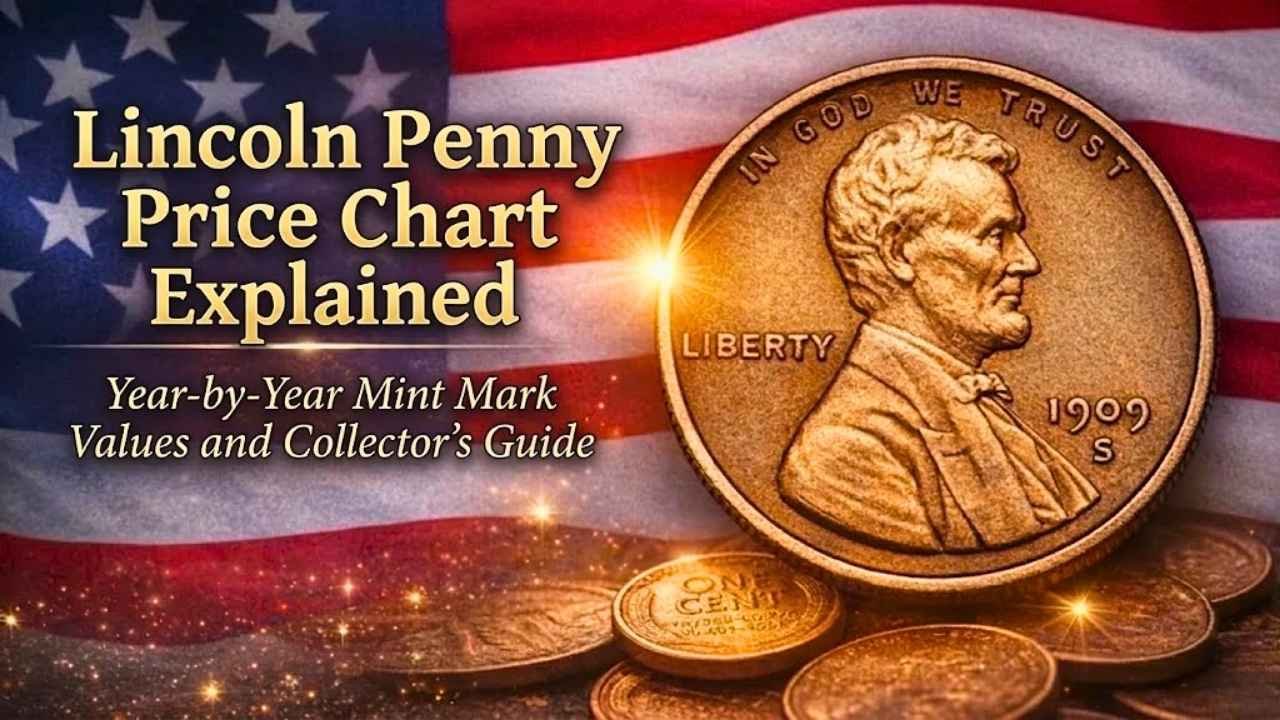
The Lincoln Penny is one of the most enduring coins in American history. First introduced in 1909 to commemorate the centennial of Abraham Lincoln’s birth, it has remained in circulation for more than a century. With its iconic design and long production run, the Lincoln Penny has become a cornerstone of coin collecting. While most examples are common and worth only face value, certain years and mint marks stand out as rare treasures. This guide provides a complete overview of Lincoln Penny values, highlighting key dates, mint marks, and varieties that collectors should know.
The Origins of the Lincoln Penny
The Lincoln Penny was designed by Victor David Brenner and introduced in 1909. It was the first U.S. coin to feature a real person rather than a symbolic figure. The obverse depicts Lincoln’s portrait, while the reverse originally featured two wheat stalks, giving rise to the term “Wheat Penny.” In 1959, the reverse design was changed to the Lincoln Memorial, and in 2010, it was updated again to depict the Union Shield. Each design change reflects a chapter in American history.
Key Dates and Mint Marks
1909‑S VDB
The 1909‑S VDB is one of the most famous Lincoln Pennies. Minted in San Francisco with Brenner’s initials on the reverse, only 484,000 were produced. High‑grade examples can sell for thousands of dollars.
1914‑D
The 1914‑D is another key date, with a low mintage of just over one million. It is highly sought after, especially in mint state condition.
1922 No D
In 1922, all Lincoln Pennies were struck at the Denver Mint, but some coins were produced without a visible mint mark due to die wear. These “No D” pennies are rare and valuable.
1931‑S
The 1931‑S had a low mintage of under one million, making it one of the scarcer issues of the series. Collectors prize this coin, particularly in high grades.
1955 Double Die
The 1955 double die penny is famous for its dramatic doubling on the date and inscriptions. It is one of the most recognizable error coins and can fetch thousands of dollars depending on condition.
Mint Marks and Their Importance
Mint marks indicate where a coin was produced. Lincoln Pennies were struck at several mints, including Philadelphia (no mint mark), Denver (D), and San Francisco (S). Mint marks can significantly affect value, as coins from certain mints had lower production numbers. For example, San Francisco issues often command higher premiums due to their relative scarcity.
Factors That Influence Value
Several elements determine the worth of a Lincoln Penny:
- Condition: Coins in mint state or proof condition are worth far more than circulated examples.
- Rarity: Limited mintage or unique varieties increase value.
- Errors: Double dies, missing mint marks, and other anomalies add uniqueness.
- Collector Demand: Popularity among numismatists drives values higher, especially for rare varieties.
Price Chart Overview
While exact values vary depending on condition and market trends, the following overview highlights general price ranges for key dates:
- 1909‑S VDB: Hundreds to thousands of dollars depending on grade.
- 1914‑D: Several hundred dollars in circulated condition, thousands in mint state.
- 1922 No D: Hundreds to thousands depending on clarity and grade.
- 1931‑S: Around $50 in circulated condition, much higher in mint state.
- 1955 Double Die: Hundreds in lower grades, thousands in pristine condition.
Common dates from the 1940s and 1950s typically sell for a few cents to a few dollars, unless they are in exceptional condition or exhibit unique errors.
Market Trends in 2026
The coin collecting market continues to thrive, with rare Lincoln Pennies achieving strong prices at auction. While common circulated examples may sell for only a few cents, rare varieties such as the 1909‑S VDB and 1955 double die continue to attract strong interest. Auction houses report steady demand for these coins, and stories of extraordinary sales inspire new collectors to join the hobby. The Lincoln Penny remains one of the most accessible entry points into coin collecting, making it popular among beginners and experts alike.
Tips for Collectors
For those hoping to discover valuable Lincoln Pennies, here are some practical tips:
- Inspect mint marks carefully, especially for early issues.
- Look closely at lettering and numbers for signs of doubling.
- Consider professional grading to verify authenticity and condition.
- Study auction records to understand current market values.
- Preserve coins properly to maintain long‑term value.
Key Highlights
- The Lincoln Penny was introduced in 1909 and remains in circulation today.
- Rare varieties include the 1909‑S VDB, 1914‑D, 1922 No D, 1931‑S, and 1955 double die.
- Mint marks play a crucial role in determining value.
- Condition, rarity, and collector demand are the main drivers of value.
- Auction records show rare Lincoln Pennies continue to attract strong interest in 2026.
Final Words
The Lincoln Penny is more than just a coin; it is a piece of American history. While most examples are common, rare varieties and pristine coins have achieved significant value. In 2026, the market for these pennies remains strong, offering opportunities for both new and experienced collectors. The true reward lies not only in the monetary value but in the connection to history and the thrill of discovery. Whether you own a common example or a rare treasure, the Lincoln Penny continues to inspire and captivate collectors around the world.