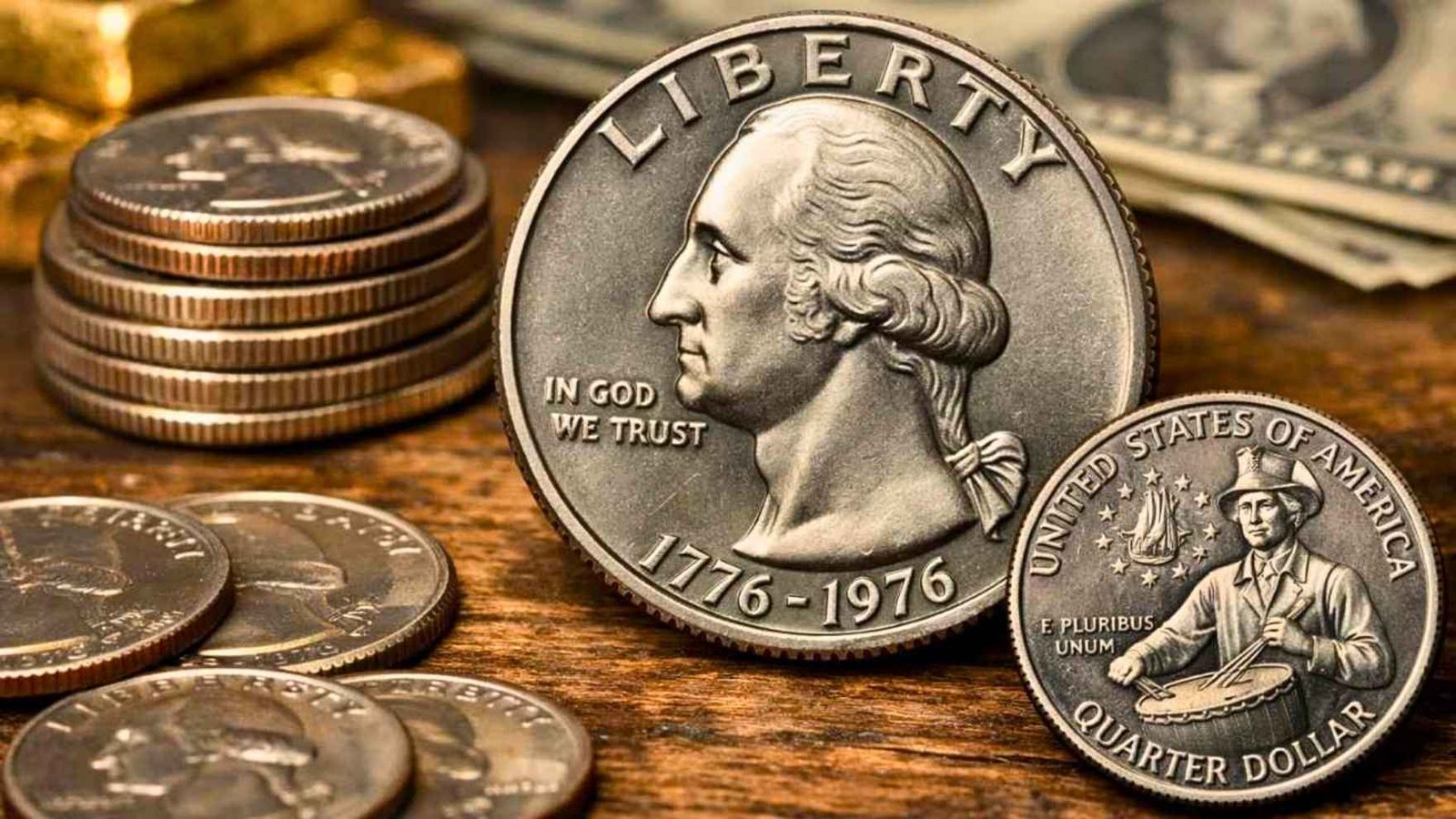
The 1776–1976 Bicentennial Quarter is one of the most celebrated coins in American history. Issued to commemorate the 200th anniversary of the nation’s independence, it features a unique design that sets it apart from regular Washington quarters. While most Bicentennial quarters are common and circulate widely, certain varieties and conditions make them highly valuable. This guide explores the history, design, and collector insights behind the Bicentennial quarter, highlighting which coins are worth collecting today.
The Story Behind the Bicentennial Quarter
In 1976, the United States Mint released special coins to celebrate the nation’s bicentennial. The quarter, half dollar, and dollar all received commemorative designs. The Bicentennial quarter replaced the traditional eagle reverse with a colonial drummer and a torch surrounded by thirteen stars, symbolizing the original colonies. The obverse retained George Washington’s portrait but included the dual date “1776–1976.” These coins were struck in both circulation and collector versions, making them accessible to millions of Americans.
Varieties of Bicentennial Quarters
The Bicentennial quarter was minted in several varieties. Circulation strikes were produced in copper‑nickel at the Philadelphia and Denver Mints. Proof versions were struck in San Francisco, including both copper‑nickel and 40 percent silver issues. The silver proofs are particularly prized by collectors due to their limited mintage and intrinsic metal value. Additionally, minting errors such as double strikes or off‑center coins add rarity and value.
Common vs. Rare Examples
Most Bicentennial quarters found in pocket change are worth only face value. However, uncirculated and proof examples can command higher prices. Silver proof quarters are especially valuable, often selling for several dollars or more depending on condition. Rare minting errors can fetch hundreds of dollars at auction. Collectors focus on identifying these rarities and preserving coins in pristine condition to maximize value.
Market Value in 2026
The value of Bicentennial quarters in 2026 depends on rarity, condition, and demand. Circulated coins are generally worth 25 cents, while uncirculated examples may range from $1 to $5. Proof coins typically sell for $3 to $15, with silver proofs valued higher. Rare error coins can reach $100 or more. Complete sets of Bicentennial coins, including the quarter, half dollar, and dollar, are also popular among collectors and can be worth $20 to $50 or more depending on grade.
Collecting Strategies
For collectors, building a Bicentennial quarter collection offers both enjoyment and investment potential. Searching through rolls of quarters or inherited collections can yield valuable finds. Investing in proof sets, particularly silver issues, is a reliable way to acquire high‑quality coins. Proper storage in coin holders or albums helps preserve condition. Networking with other collectors and staying informed about auction results ensures awareness of market trends. Collecting should be approached with patience and appreciation for history.
Historical and Cultural Significance
The Bicentennial quarter holds cultural importance beyond its monetary value. It symbolizes America’s celebration of independence and reflects national pride during the bicentennial year. For many, it was a coin that marked a historic moment in everyday life. Collectors cherish it not only for rarity but also for the story it tells about America’s past. Each Bicentennial quarter represents a piece of history carried in the palm of the hand.
Investment Potential
While most Bicentennial quarters are common, rare varieties and silver proofs offer investment opportunities. Their values have appreciated over time, particularly for high‑grade examples. Investors view them as tangible assets that combine cultural heritage with financial potential. For those seeking diversification, rare coins provide both stability and excitement. The Bicentennial quarter remains a promising area for collectors and investors alike.
Key Highlights
- The Bicentennial quarter was issued in 1976 to celebrate America’s 200th anniversary.
- It features a colonial drummer and dual date “1776–1976.”
- Varieties include circulation strikes, proof coins, and silver proofs.
- Most circulated coins are worth face value, while uncirculated and proof examples hold higher value.
- Silver proofs and rare minting errors are especially prized.
- Complete Bicentennial coin sets are popular among collectors.
- The coin holds cultural significance as a symbol of national pride.
- Investment potential lies in rare varieties and high‑grade examples.
Final Words
The 1776–1976 Bicentennial quarter remains one of the most beloved coins in American history. While most are common, rare varieties and silver proofs demonstrate the extraordinary value hidden in commemorative coinage. For collectors, the pursuit of Bicentennial quarters combines history, artistry, and the thrill of discovery. For investors, they offer tangible assets with proven appreciation. Ultimately, Bicentennial quarters remind us that even the smallest coin can hold immense meaning and value, ensuring their place in numismatic history for generations to come.